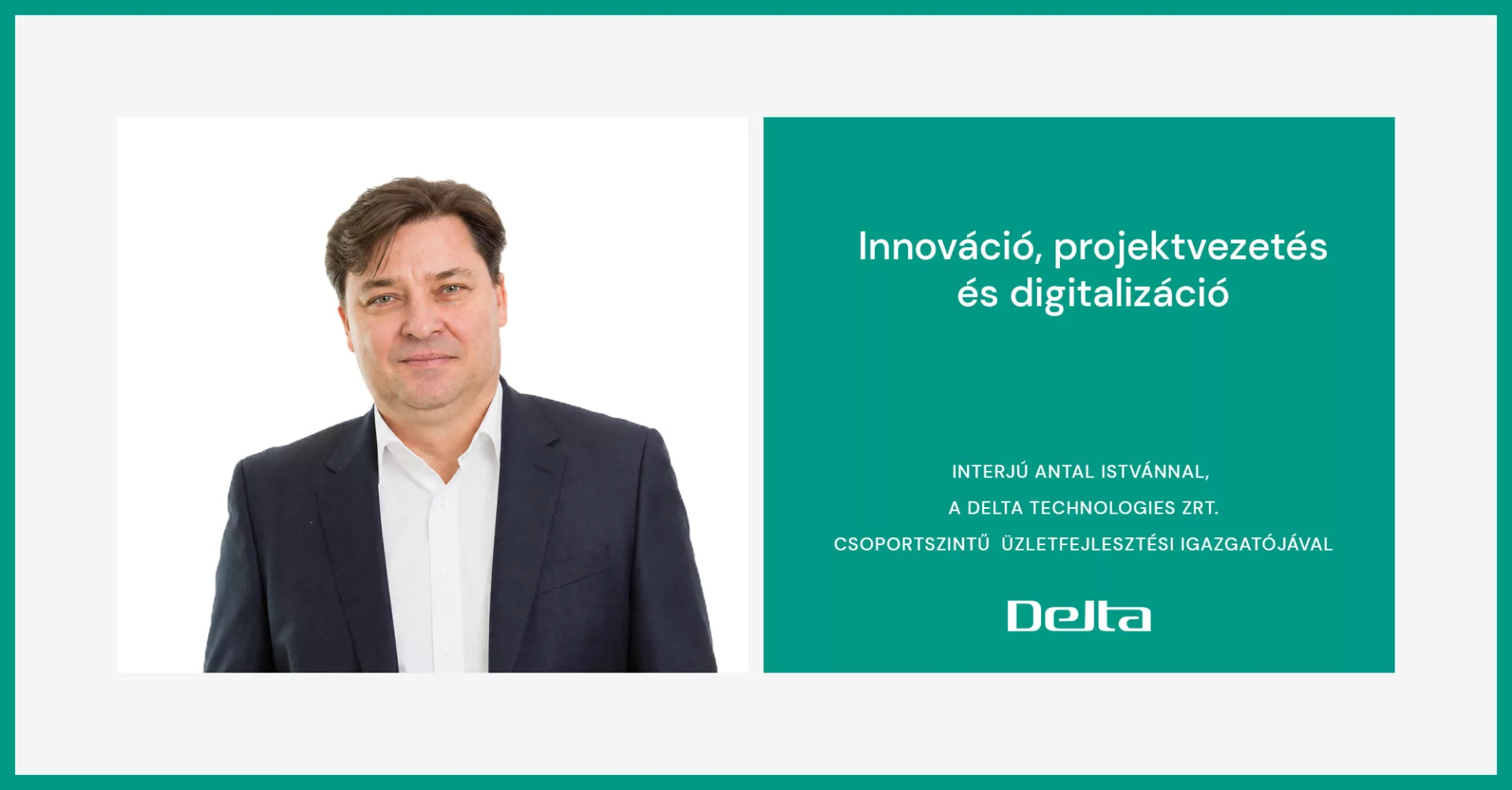
From habit to competitive advantage: how Delta is shaping the future of companies
Digitalisation is no longer a purely technical development, but rather the creation of business value. Delta's aim is to support its clients as a strategic partner in implementing data-driven operations, artificial intelligence, and process automation.
The focus has shifted from selling IT equipment to complex business transformation, which provides long-term competitive advantage and sustainable growth.
What does business development mean for Delta today, and how has the focus changed in recent years?
For Delta, business development doesn't mean selling IT solutions, but supporting the transformation of complex business and logical processes. The classic transaction-oriented approach is gradually being replaced by long-term value creation, where digital and engineering solutions tailored to clients„ business goals take centre stage. Technology is a tool in this, with the real added value lying in the consultative approach, knowledge gained from data, and cross-industry experience, while we also continue our classic system integration activities. Thus, the focus shifts from B2B ”box-pushing" to a consultative approach. For Delta, this perspective means being able to act as a strategic partner to its clients throughout the entire digital transformation process, moving beyond the role of a system integrator.
Why do you consider the medium and long-term outlook to be particularly important, and in which areas do you expect the biggest breakthroughs?
Sustainable development cannot be conceived without strategic thinking. The role and possibilities of using IT cannot be interpreted in isolation, but rather as a response to business needs, to which continuous adaptation is required. I expect breakthroughs from SMEs, while continuing to support large enterprises.
A key issue for the Hungarian SME sector is guidance on digitalisation, as their competitiveness depends on how well they can make their operations data-driven. This alone does not guarantee genuine value creation. To achieve this, company processes must first be mapped, then understood, and any potential errors or shortcomings corrected, supplemented, and the associated data consolidated. Only then can the stage be reached where processes become automatable, and truly well-founded, data-driven decisions can be made, overseen by humans. IT is therefore the foundation, but value is created by de-bugged and automated processes built on clean data, which are measurable and monetisable.
A key issue for the Hungarian SME sector is guidance on digitalisation, as their competitiveness depends on how well they can make their operations data-driven. This alone does not guarantee genuine value creation. To achieve this, company processes must first be mapped, then understood, and any potential errors or shortcomings corrected, supplemented, and the associated data consolidated. Only then can the stage be reached where processes become automatable, and truly well-founded, data-driven decisions can be made, overseen by humans. IT is therefore the foundation, but value is created by de-bugged and automated processes built on clean data, which are measurable and monetisable.
What are the main digital trends driving Delta's market solutions today?
Today, Delta's solutions are defined by digital trends that harness business advantage from data. Data assets are no longer merely for saving and archiving, or for processing in Excel spreadsheets or ERP systems, but are a strategic tool shaping the future. The emphasis is on exploiting data for business purposes: analysis, visualisation, and real-time decision support are the goals. Machine learning and the BI platforms that „feed” them enable companies to anticipate future challenges and opportunities based on past experiences. Data has thus become the most valuable resource, which, with appropriate processing and artificial intelligence, not only supports but elevates the reliability and efficiency of corporate operations to a new level, creating competitiveness.
How is Delta's cloud and cybersecurity strategy structured?
Delta’s cloud and cybersecurity strategy is based on the premise that customer data is the most valuable company resource. Therefore, we do not rely exclusively on public cloud solutions, but also on hybrid and on-premises environments where sensitive data can be managed securely. Processing is carried out by closed systems, even with artificial intelligence support. Our goal is for our clients’ data assets to remain under control, while still enabling them to enjoy the benefits of modern, scalable digital infrastructure.
This approach not only ensures compliance with GDPR, NIS2, and DORA regulations but also fosters a security culture where reliability, transparency, end-to-end auditability, and resilience are fundamental requirements. Therefore, the Delta strategy is not about "cloud or on-prem", but about building the most secure and appropriate environment for the specific client.
This approach not only ensures compliance with GDPR, NIS2, and DORA regulations but also fosters a security culture where reliability, transparency, end-to-end auditability, and resilience are fundamental requirements. Therefore, the Delta strategy is not about "cloud or on-prem", but about building the most secure and appropriate environment for the specific client.

In which specific business and technological areas are digitalisation and AI innovations emerging?
Digitalisation and AI innovation are bringing breakthroughs in numerous business and technological areas. In healthcare, processing and analysing structured and unstructured data using neural networks and machine vision elevates diagnostics to a new level. It does not replace the medical decision-maker but rather makes decisions faster and more reliable as a preparatory and supportive tool. In industry, the food industry, and the FMCG sector, artificial intelligence also offers direct business advantages, whether it's optimising logistics processes, monitoring energy consumption, quality control, or creating digital twins. These solutions concurrently serve efficiency, cost reduction, and business agility.
What are the critical competencies and organisational changes essential for success?
In today's evolving market and technological landscape, critical competencies for success at Delta include data and digitalisation knowledge, enabling the commercial utilisation of data assets. Equally important are agility and flexibility, as these ensure rapid adaptation to constantly changing customer needs and regulatory environments. Strategic thinking guarantees that technological developments generate genuine business value, while cybersecurity and compliance knowledge protects data assets in line with GDPR, NIS2, or DORA requirements. Furthermore, customer-centric innovation plays a key role in providing tailored solutions for real-world problems, alongside the continuous development of internal teams and talent retention. Collectively, these competencies enable Delta to support its clients not just as a system integrator, but as a strategic partner in achieving digitalisation and data-driven operations.
For us, legal compliance, the compliance function, and ESG are no longer administrative burdens, but fundamental business requirements. Legal compliance ensures operational stability, compliance guarantees process reliability, and ESG sets the direction for future-oriented, sustainable development.
For us, legal compliance, the compliance function, and ESG are no longer administrative burdens, but fundamental business requirements. Legal compliance ensures operational stability, compliance guarantees process reliability, and ESG sets the direction for future-oriented, sustainable development.
What can be expected in the next 3-5 years, and what is Delta's role in this?
The biggest business challenge and opportunity over the next 3-5 years is the optimisation and automation of processes based on artificial intelligence. Companies that do not incorporate AI into their operations could find themselves at a significant competitive disadvantage. Delta's role in this is to make the benefits of digitalisation and data-driven decision-making accessible not only to large corporations but also to small and medium-sized enterprises. Our mission is to support our clients in how they can leverage their data for cost reduction, revenue growth, and increased operational efficiency – thereby creating genuine, sustainable business value for them.